
How Physical Therapy Helps After a Car Accident
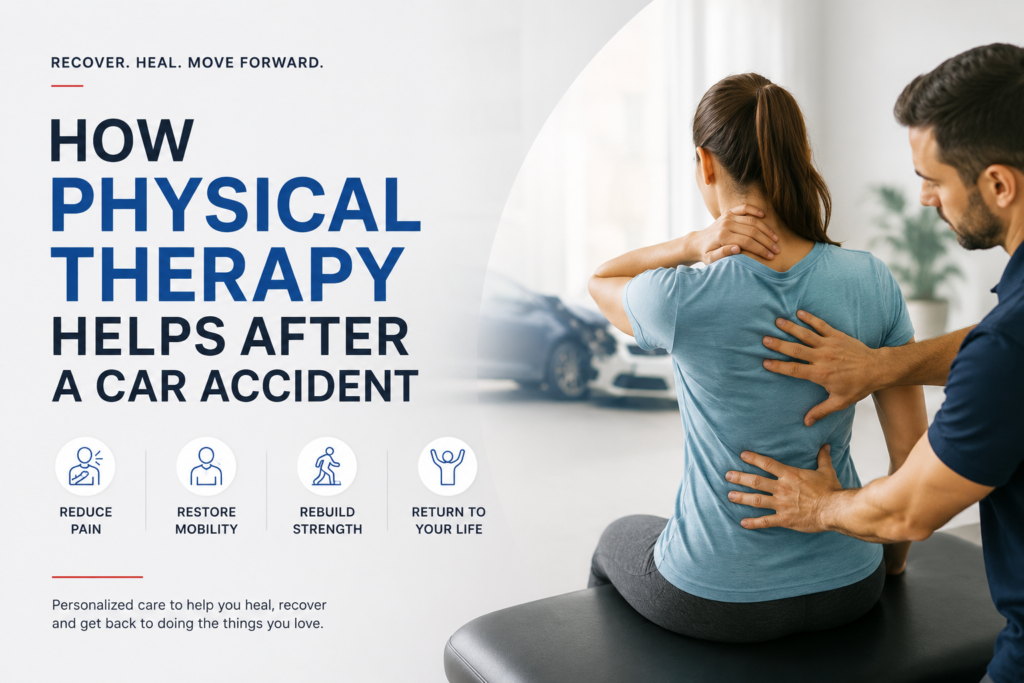
A car accident can cause long-term issues to the body even when there don’t seem to be any visible injuries. Common injuries are soft tissue damage, whiplash and joint strain, many of which may not be felt immediately. Physical therapy can be a crucial part of recovering from a car accident and can help restore motion, alleviate pain, and help you get strong again safely.
Why Pain Doesn’t Always Show Up Immediately
The stress of an accident and the adrenaline can obfuscate pain for hours and days following the accident. Often symptoms such as headaches, reduced range of motion, back pain, and/or stiff neck develop 24–72 hours after the event and sometimes even longer. Because of this delayed onset, an evaluation soon after an accident — even if you feel “mostly fine” — can make a difference in the course of your recovery.
Common car accident injuries that physical therapy can help you treat
- Whiplash : Sudden neck movement in a collision can injure the muscles and ligaments, and result in stiffness, headaches, and restricted range of motion in the neck.
- Back and spine strain : – Impact can compress or strain the back or spine, resulting in lower or upper back pain.
- Shoulder and seatbelt injuries : – A seatbelt can cause discomfort to the shoulders, chest or ribs during impact.
- Joint and soft tissue injuries : – Knees, wrists, ankles can be injured through ‘bracing’ in a collision.
What Physical Therapy Treatment Typically Involves
Each recovery plan is unique as the type and severity of the injury is different for each person. A physical therapist will first assess all your movement, strength and pain levels, and then create a plan that may involve:
- Manual therapy to decrease muscle tension and aid joint mobility
- Restored stability through targeted stretching and strengthening exercises
- Posture and movement retraining, particularly for whiplash type neck and upper back injuries.Posture and movement retraining, particularly for whiplash type neck and upper back injuries.
- Progressive activity to ensure safe return to work, driving and activities of daily living.
The aim is to be treated in a structured manner, not to rest the whole time or to try to do too much, too soon, or without the proper guidance, or all of these combined — which all can decelerate recovery or create long-term problems.
Why Early Treatment Matters
Untreated soft tissue or joint injuries may at times result in chronic stiffness or in the development of compensating movement patterns which cause issues elsewhere in the body. Beginning PT treatments early after an accident (not waiting to see if the symptoms will clear up) provides your body the best chance to regain strength and mobility. This process is available in Pennsylvania without a physician’s referral. Direct Access empowers you to be assessed and start physical therapy treatment immediately with a licensed physical therapist, potentially helping you get on the path to recovery as soon as possible.
When to See a Physical Therapist After an Accident
Even if you have a small car accident, if your neck or back is stiff, you don’t have as much range of motion as you used to, you get headaches, or your neck or back hurts long after the collision, it’s best to get it checked out. A physical therapist is able to start pinpointing areas of concern early and start to design a recovery program that fits the injury.
Our motor vehicle accident injury treatment program at UNIQ Physical Therapy is designed to get you back to your daily activities safely and without any further injury, if you’ve suffered an injury in a car accident, and want to know the options for treatment.
About the Author
Dr. Ankit Patel, PT, DPT, founder of Uniq Physical Therapy, brings 10+ years of expertise to the Warminster and Lansdale communities. He earned his Doctorate from Arcadia University and previously managed clinics for industry leaders like Rothman Orthopaedics, ATI, and Novacare. Specializing in orthopedic, sports, and geriatric care, Dr. Patel is LSVT BIG Certified and integrates holistic practices like Yoga and Reiki into his evidence-based treatments. Dedicated to building deep patient trust, he focuses on non-surgical recovery and personalized care to help every individual reclaim their mobility and health.