

Rotator Cuff Injury vs. Frozen Shoulder: How Do You Know Which One You Have?
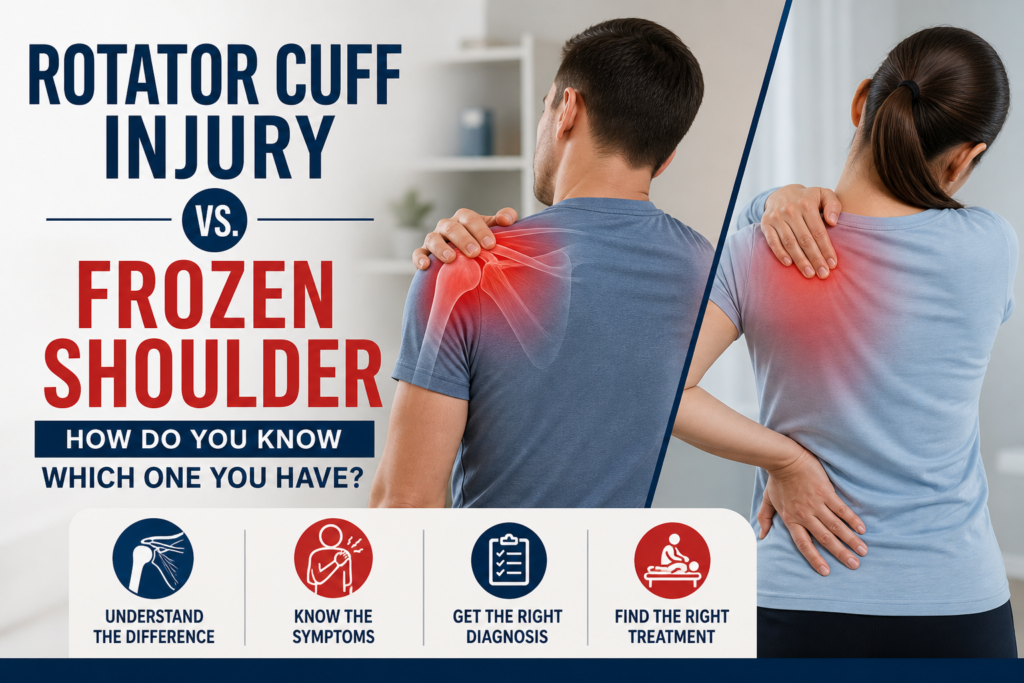
Shoulder pain is one of the most frustrating conditions to live with. It affects everything — getting dressed, reaching for a shelf, sleeping comfortably, even driving. But before treatment can work, you need to know what you’re actually dealing with.
Two of the most commonly confused shoulder conditions are rotator cuff injuries and frozen shoulder. They share overlapping symptoms, which is why so many Lansdale residents end up waiting months without the right diagnosis — or the right treatment. Here’s how to tell them apart.
What Is a Rotator Cuff Injury?
Shoulder pain is one of the most frustrating conditions to live with. It affects everything — getting dressed, reaching for a shelf, sleeping comfortably, even driving. But before treatment can work, you need to know what you’re actually dealing with.
Two of the most commonly confused shoulder conditions are rotator cuff injuries and frozen shoulder. They share overlapping symptoms, which is why so many Lansdale residents end up waiting months without the right diagnosis — or the right treatment. Here’s how to tell them apart.
What Is a Rotator Cuff Injury?
Your rotator cuff is a group of four muscles and tendons that stabilize your shoulder joint and allow arm movement in multiple directions. A rotator cuff injury occurs when one or more of these tendons become strained, partially torn, or fully torn.
Common signs of a rotator cuff injury include:
- Sharp pain when lifting your arm overhead or rotating it outward
- Weakness when reaching behind your back
- A clicking or popping sensation during movement
- Pain that worsens when lying on the affected shoulder at night
Rotator cuff problems are common in people who perform repetitive overhead movements — painters, carpenters, athletes, and anyone over 40 whose tendons have naturally begun to weaken with age.
What Is Frozen Shoulder?
Frozen shoulder, clinically known as adhesive capsulitis, is a different condition entirely. It occurs when the connective tissue surrounding the shoulder joint thickens and tightens, creating a mechanical restriction in movement.
Common signs of frozen shoulder include:
- A dull, constant ache that is present even at rest
- Progressively worsening stiffness over weeks or months
- Pain that is noticeably worse at night
- Feeling like the shoulder is physically “locked” in place
Frozen shoulder frequently develops after a period of immobility — following surgery, an injury, or prolonged inactivity. It is also significantly more common in people with diabetes or thyroid disorders.
The Key Clinical Difference
Here is the most important distinction a physical therapist will use during evaluation: passive range of motion.
With a rotator cuff injury, you may be able to lift your arm if someone else assists you — the joint itself can move, but your muscles are too weak or painful to do it independently.
With frozen shoulder, even with external assistance, the arm cannot move through its full range. The joint capsule itself is restricted, creating a mechanical barrier that no amount of force can easily overcome.
This single test often tells a skilled physical therapist a great deal before any imaging is ordered.
How Physical Therapy Helps Both Conditions
The good news is that both conditions respond well to physical therapy — though the approach differs.
For rotator cuff injuries, treatment focuses on strengthening the surrounding muscles, restoring joint stability, and reducing inflammation through manual therapy and targeted exercise. Many partial tears resolve completely without surgery.
For frozen shoulder, treatment prioritizes restoring range of motion through progressive stretching, joint mobilization, and soft tissue work — gradually breaking down the restrictions within the capsule.
At UNIQ Physical Therapy in Lansdale, Dr. Ankit Patel performs a thorough evaluation to identify the root cause of your shoulder pain before designing a personalized, one-on-one treatment plan. No guesswork. No generic protocols.
Don’t Let Shoulder Pain Become a Chronic Problem
Both conditions worsen when left untreated. The earlier you seek a proper evaluation, the faster and more completely you can recover.
Request an appointment at UNIQ Physical Therapy in Lansdale today and get the answers — and the relief — you deserve.
Frequently Asked Questions
Can a frozen shoulder heal on its own? Frozen shoulder can improve over time — typically 1 to 3 years — but physical therapy significantly accelerates recovery and prevents permanent loss of motion.
Do I need an MRI before starting physical therapy for shoulder pain? Not always. A skilled physical therapist can often identify the likely cause of shoulder pain through a clinical evaluation. Imaging may be recommended if surgery is being considered or if symptoms are unclear.
Is rotator cuff surgery always necessary? No. Many partial rotator cuff tears respond very well to physical therapy alone. Surgery is typically considered only for full-thickness tears or cases where conservative treatment has not improved the condition after several months.
About the Author
Dr. Ankit Patel, PT, DPT, founder of UNIQ Physical Therapy, brings 10+ years of expertise to the Warminster and Lansdale communities. He earned his Doctorate from Arcadia University and previously managed clinics for industry leaders like Rothman Orthopaedics, ATI, and NovaCare. Specializing in orthopedic, sports, and geriatric care, Dr. Patel is LSVT BIG Certified and integrates holistic practices like Yoga and Reiki into his evidence-based treatments. Dedicated to building deep patient trust, he focuses on non-surgical recovery and personalized care to help every individual reclaim their mobility and health.